
Remigration in Practice
A Look at History Shows Our Options

Your favorite twitter personality has probably tweeted ‘Deportations are the moderate option!’ and then refused to elaborate. Most of them are just too chickenshit to go further. Some are secretly bleeding heart libs deep down. But what I’ve noticed is that a lot of them just don’t know what options exist between saying ‘please leave’ and death camps. The Boys in Belfast are instruments of history, but everyone seems a bit afraid to place them in context.
Looking through history, there is a clear gradation of options for how to remove an invasive population. If a civilization fails to remove barbarians, it dies. That is to say, this will become the number one priority for a civilization eventually and will only grow in importance as time goes on. There are no Hittites or Myceneans anymore, no Mayan or Roman Empires around.
The options will go from least to most brutal. Coincidentally, they will also correspond to least to most effective. As we are in the midst of potential collapse, these options will be important to keep in mind and will inform us as to what actions need to be taken.
This Article is for educational purposes only. I would never advocate for saving my civilization or any of the methods prescribed.
Option 1: Incentivization
Like an alcoholic in recovery, the first step toward recovery is acknowledgement. But an alcoholic is not saved by mere acceptance of his condition. He must commit to recovery. Similarly, many European schemes hold a similar flavor. They acknowledge immigration has gone too far but offer half solutions. Historically, there have been somewhat similar approaches with varying results. Incentivizing an alien people to go somewhere else (home or elsewhere) can work but only if the conditions are right.
Approach: Government Gibs to Return
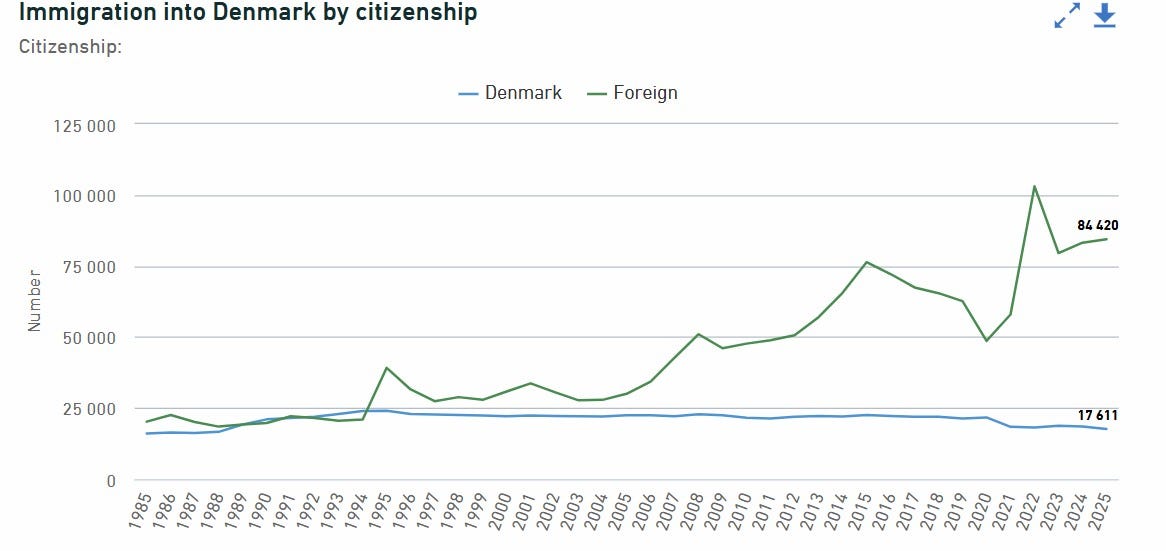
In 2022, Denmark passed a new law, the Repatrieringsloven. It created a repatriation scheme to incentivize refugees to return home. The logistics are coordinated by the government. It even offers nearly $40,000 to ‘help them land back on their feet’ (read: a bribe to please leave). Per Denmark’s Ministry of Immigration and Integration, “A total of 523 people used the national repatriation scheme, of whom 413 returned to Syria, marking a substantial rise compared to 94 in 2024.”
A quick look at the graph below shows that this is less than 1% of the number coming in annually. Ultimately, this policy will always be a failure if implemented alone.
Approach: Give Them Somewhere Else to Colonize
The Patrick Star ‘why don’t we take them and put them somewhere else’ approach has mixed successes historically. Two examples stick out, the immigration of the Puritans to the Americas and the failed movement of recently freed slaves to Liberia in the aftermath of the American Civil War.
To make a long story short, the Puritans were a distinct (and oft described as extreme) Protestant minority within England in the 1600s. They tried moving from country to country within Europe to no avail. The English did not want them there and they certainly did not want to be under the reign of what they considered an astray Anglican Church.
English Colonies in America: The Puritan Colonies by John Andrew Doyle:
“In England, temporary conditions had kept the Puritan in temporary union with a system to which in his heart he found hostile. In America, he was set free from these conditions and accepted his emancipation.”
A solution was found that made everyone happy. The Puritans went to America and settled it under the English crown. They got to have their own society and the King got to add to his territories and stake out a position in the New World to build off of. A relatively small population group, mostly unclaimed land, and aligned incentives made this successful.
Conversely, America would later experience an absolute failure in an attempt to send a marginalized group away as colonists. The American Colonization Society1 was created in the early 1800’s in an attempt to repatriate African slaves to what would become Liberia. Jefferson realized at the founding of the United States that the large slave population of an entirely different race was going to become the biggest elephant in the room in American politics. This was an attempt to rectify this.
Ultimately, this effort would fail. Only around 10,000 freed blacks went to Liberia. The society fell apart and in 1847, Liberia just declared independence. This effort failed for a few reasons. They managed to piss off abolitionists and Southern planters. They also failed to convince freed slaves to actually go back (who made a rational decision not to be sent into an already occupied place with no resources). This effort was purely an attempt to rid a population and hopefully stake out a colony. There were not aligned incentives nor was this a small undertaking on easily colonizable land.
Approach: Expeditionary Force
Another option is to offer the sword to groups in exchange for leaving (or at least to get their fighting age males away). In our current paradigm, this is likely less practical although we do somewhat see Russia utilizing this approach by putting minority populations at the front lines.
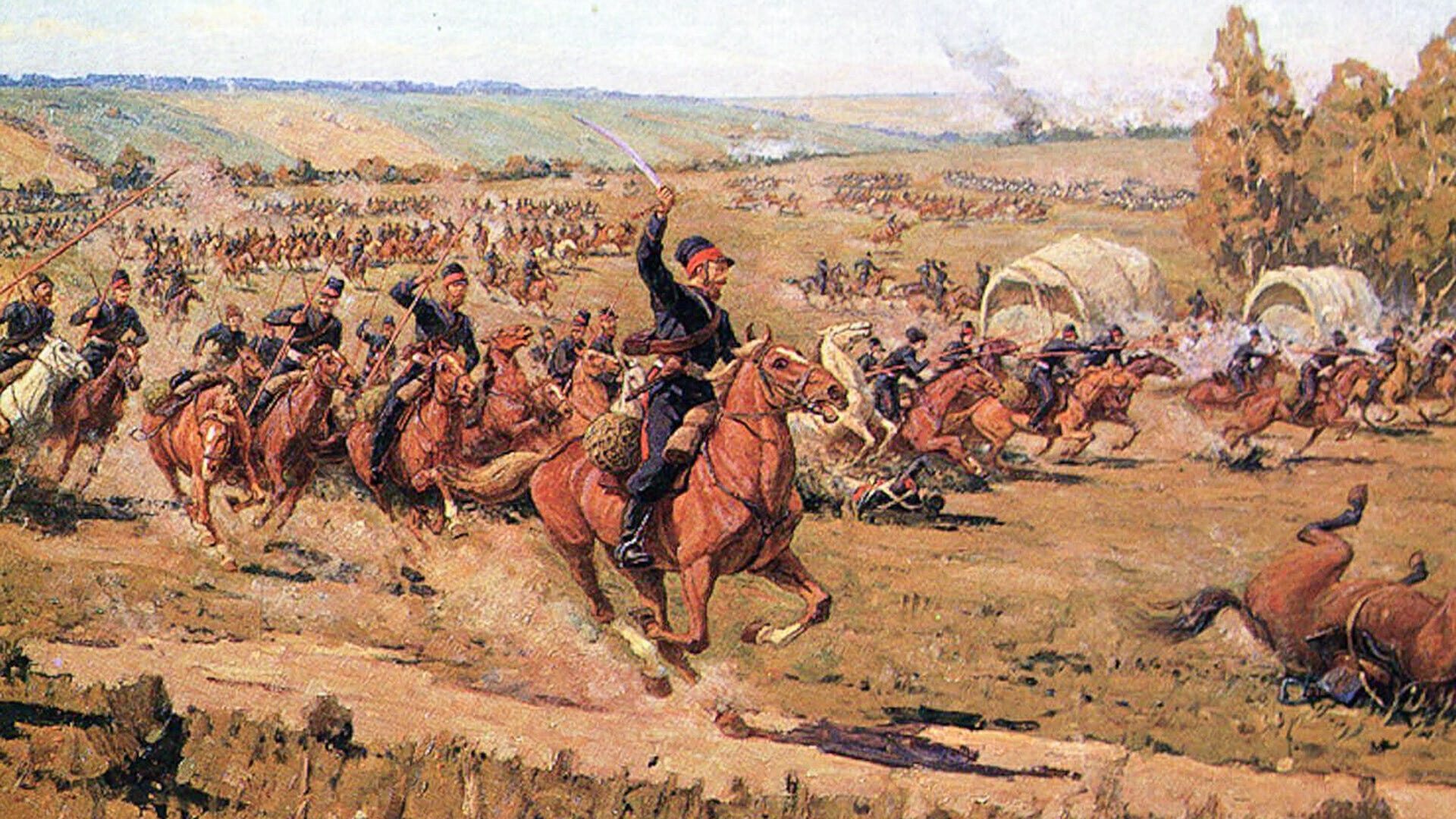
One quick example to bear in mind is that of the Cossacks. Primarily located in modern day Ukraine, the Cossacks were a distinct ethnicity who were often bellicose. After several uprisings against the Tsar, Russia found a solution. They offered the Cossacks land and riches to help expand the frontier. The young men went elsewhere to fight and were less able to rebel as a result. They would become the elite troops of the Russian Empire. While this worked (until the Russian Revolution) there is inherent risk here of losing your state to a warrior minority a la The Mamelukes.
Drawbacks
Ultimately, these are half measures. These sorts of things work great for small, targeted actions but are wholly unable to reverse the invasions we see today. While some of these approaches could be ancillary measures to assist with remigration, none alone will solve the crisis. In the modern era, colonization and mercenaries are uncommon and generally disallowed in the post-1945 world order.
Option 2: Legislate Removal
Approach: Lawfare
Zoomer Historian2 recently did a great a podcast on The White Australia Policy. To summarize, Chinese labor flooded into Australia and undercut wages and drastically changed the demographics of the country. Attempts to stop the invasion were halfhearted at first as the elites were profiting from it. One state was even on the verge of becoming majority Chinese. Eventually (and after a few mostly peaceful riots), legislation was implemented to halt immigration from China. It took several attempts, but eventually a stop was put to this immigration.
America had a similar problem and solution. In the West, Chinese workers had also begun to invade as cheap labor while not assimilating. In 1882, the Chinese Exclusion Act was signed into law which halted all immigration from China for 10 years and required any Chinese who exited the country to request permission to reenter. This law was functionally extended until 1943 when it was done away with due to optics from alliances in World War Two (or, more likely, due to Roosevelt’s design for the destruction of American society). This legislation was mostly successful but in both cases they were only a pen stroke away from reversal at all times.
Drawbacks
While these measures went further than the first option of incentivization, they ultimately fall short. White Australia had to constantly relegislate removal and fight immigration from new sources like the British Raj. These actions are good when you have a government that works for you or can at least be made to do your bidding (with a maybe implicit threat of the v word). As we can see now though, legislation is temporary and Australia was still able to import more hordes after World War Two.
While these options should still be pursued, in our current state of 2026 the governments of Western countries are in the hands of traitors. That is to say, while lawfare may help on the surface to remove invasive populations, it should be expected that any legislation will contain ‘poison pills’ and workarounds to ensure the invasion continues.
Option 3: Targeted Deportations
Legislation is likely a prerequisite to actually deporting hostile populations. Whether by decree in a dictatorship or through an act in a democracy, the immigration must be halted before it can actually be reversed. Two examples below illustrate successes in deportations.
Approach: Deporting Illegal Immigrants Only
The U.S. Border Patrol by Clement Hellyer:
“Operation Wetback proved the forecasters wrong. Control of the border in the western sectors [California] was achieved within a few weeks. Then, leaving behind sufficient strength to hold the line, the task forces moved into south Texas in mid-July. There again the operation scored a victory. In the course of a year, Operation Wetback brought about the arrest and deportation of more than a million aliens.”
By 1950, illegal immigration into the United States had become a dire issue. During World War II, braceros3 were allowed into the US as laborers, primarily in agriculture. At the time, this made sense to fuel the war effort as boys from America’s heartland went off to the Pacific and North Africa. Like literally every ‘temporary work program,’ this quickly became a means for Mexicans to permanently immigrate to the United States and reap its benefits while being a net negative contributor.
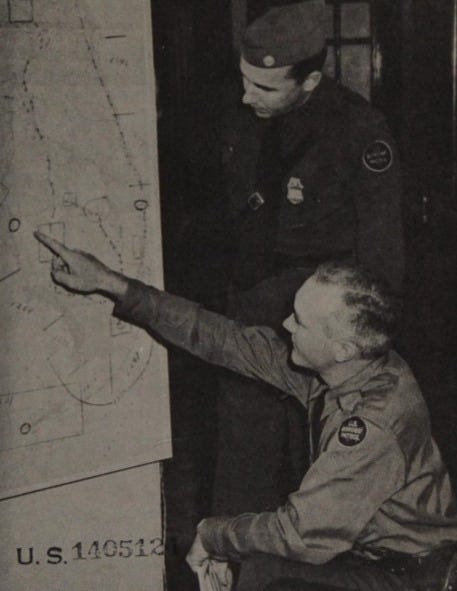
In 1954, Eisenhower had enough of the millions of illegal migrants into the Southwest. An aggressive operation headed by the US Border Patrol was authorized to deport both the illegal border crossers and braceros who overstayed their welcome. It was dubbed Operation Wetback and in 1954 over 1 million deportations occurred.
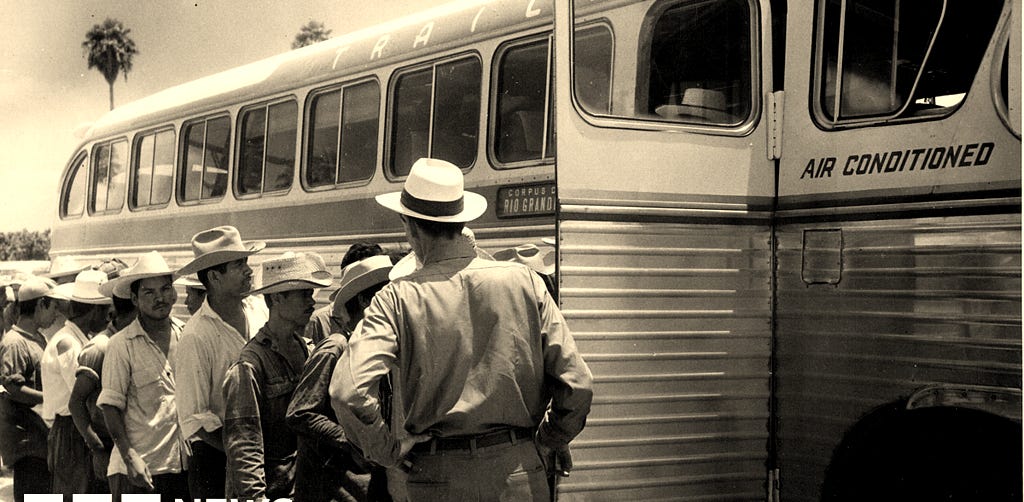
What this era had was a higher level of unity, a homogenous country outside the border zone, and the political will to get it done. Large troop carrier ships were making daily voyages packed to the brim with migrants being taken from Texas to Veracruz. In a country with twice the population of 1954 and far more advanced means to carry out deportations, we only managed about half the number. For Eisenhower this was a side project, for Trump it was his entire mandate and was still a failure. Ultimately, even Eisenhower’s work proved a temporary solution as successive waves came across the border decades later.
Our lesson here is that targeted deportations of illegal immigrants is good (and necessary) but is wholly inadequate in isolation. Perhaps in a different era it would be enough, but in 2026 America (and the West writ large) we are not in a position to carefully and litigiously remove all the invaders. More importantly, this does nothing to stop the Paki from an Islamabad slum from still trying to migrate. In his calculus, the worst that can happen is he just gets sent back to his current status quo.
Approach: Deporting Entire Populations
War in Uganda: The Legacy of Idi Amin by Tony Avirgan:
“Amin, in 1972, decreed that noncitizen Asians had just three months to leave the country. In the ensuing panic, fed by verbal and in some cases physical attacks, most of Uganda’s eighty thousand Indians, including some twenty thousand citizens, packed up and left. In 1973, Amin announced that only 2,000 Asians remained.”
Love him or hate him, but you cannot deny that Idi Amin was a man who forced himself into history. One of the things he is vilified for (as seen in The Last King of Scotland) is his expulsion of the ‘Asians’ (read: Indians). Long story short, wealth had been consolidated in critical industries by the imported Indian population; a vestige of British colonialism. Many had lived their for multiple generations but they had not assimilated in any manner and kept all wealth and employment within their communities (tbf I also would not have been handing over my stuff to random Ugandans either).
Amin banished the entire population. His reasons for doing so were myriad and it’s popularly attributed to trying to scapegoat a population to rally his base (which is not false but is a gross oversimplification of his motives and rationale). Whatever the reason, his order was final and unambiguous. Anyone of Indian origin was to leave, citizenship and papers be damned. The not so implicit threat of extreme violence was held over the heads of anyone thinking about staying and not emigrating.
As the previous quote shows, it worked. This approach can work if the conditions are right. That is, if a population is totally alien to yours and small in number then it can be easily identified and removed. Additionally, the Asians were almost all in the cities and not difficult to locate. This approach could work in our current paradigm only under certain circumstances.
For example, Japan could hypothetically ‘expel the Kurds’ and expect it to be a relatively unambiguous order. In reality, the current elite would weaponize the global financial system against anyone who tries this. In America though, things are likely too far gone for this approach to work. The current half hearted attempts to remove Somalians show the limits of this approach. After all, Ilhan Omar still sits in Congress even though Trump makes his super serious threats to deport her every few months.
Drawbacks
Go to a border town in the US today and tell me whether Operation Wetback succeeded in the long term. It worked great for 20-30 years until they hopped the border again and had Ronald Reagan grant them all amnesty. Deportations are good and necessary, but if they do not produce fear then they will never be enough. Deportations are putting a bandaid on a cut without subduing a blade swinging at you. Eisenhower’s approach was great for the 1950’s but it did nothing to remove the incentive for immigrants to come here. And, frankly, you are not manually deporting 100 million people; the majority need to leave of their own volition.
Conversely, Idi Amin’s approach was the exact opposite in this regard. The fear of God was absolutely put into the Indian population who fled (and were often victims of violence on the way out). His approach only worked so well because the people being deported were such a small population and very noticeably different. Additionally, his power was centralized in the executive in a manner alien to modern Western governments. It also bears noting that he collapsed his own economy because of the carelessness of his approach and failure to account for which industries the Indians were wholly responsible for.
Option 4: Pogrom
The missing element in the first three approaches is a strong negative incentive. While Amin accomplished this somewhat, his approach isn’t the best analogue. Those approaches are all about encouraging someone out or stopping them from coming in. When violence becomes involved, this changes quickly.
Approach: Targeted Attacks with a Clear Destination for Emigration
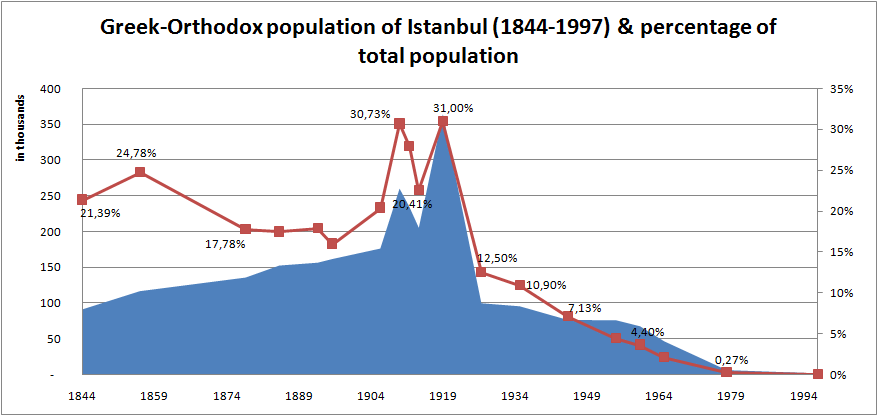
When clear lines are drawn by national borders, encouraged migration becomes much simpler. Two examples illustrate this. The violence in the wake of the 1947 Partition of India and the 1923 ‘Greek-Turkish Population Exchange’ represent two distinct but similar approaches.
In the aftermath of World War II and the Quit India Movement, the British Crown concluded it could no longer hold the Raj. A British administrator, Cyril Radcliffe, was given the reins and told to figure it the fuck out (despite never having been outside of Europe).
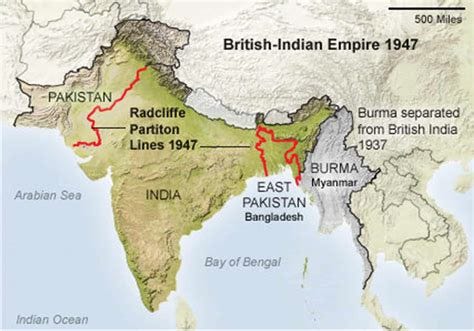
The subcontinent was riddled with political questions. In places like Kashmir, a Hindoo prince ruled a Muslim population. In Bengal, Muslims were the majority but were a world away from any fellow Muslims. In Hyderabad, there were a lot of Muslims too but they were entirely surrounded by Hindoos. Lines were drawn, compromises made, and chaos erupted.
In Punjab and other border areas, violence began. Neighbors began slaughtering each other over religious (and less often ethnic) divides. Pogroms were deployed en masse. Despite neither state having much capacity to govern yet, the message was clear: get to your side of the border. Ultimately, up to 20 million people immigrated/emigrated (your pick on what to call it lol) while up to 2 million died.
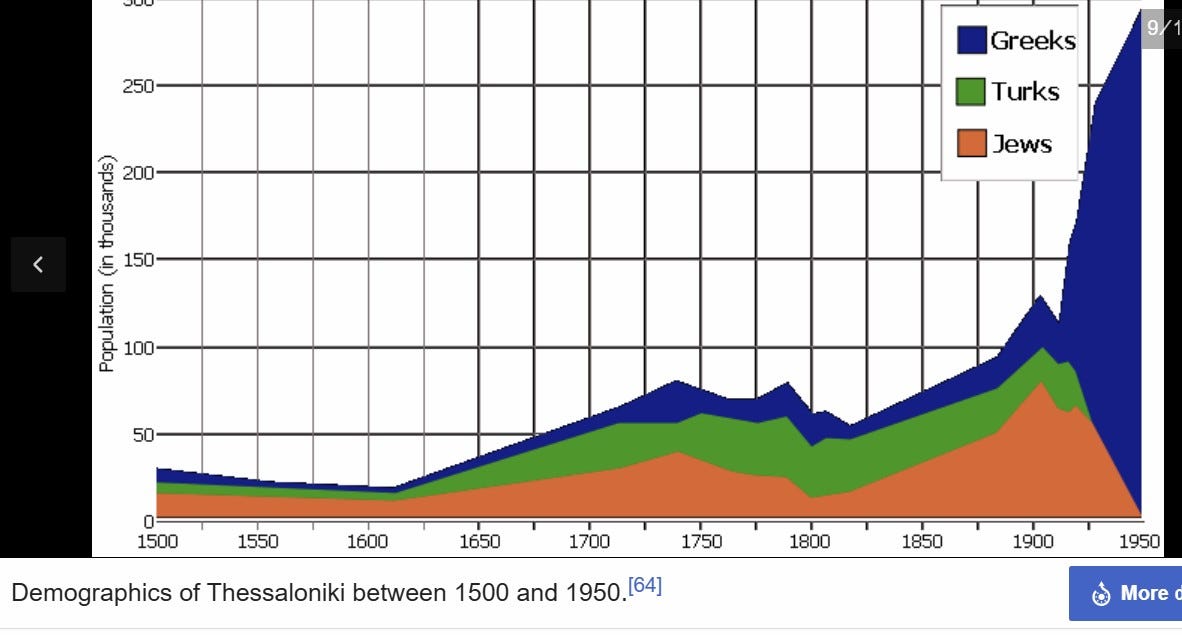
Greece and Turkey faced a similar situation in the early 1920’s. After World War I, the former Ottoman Empire had been occupied by a variety of nations. Ataturk rallied the Turkish people and won back modern day Turkey with a stunning defeat of Greece in 1922.
Animosity between Greeks and Turks was now irreconcilable. Both states sought to make a deal to resolve the large populations living within each other’s borders. Before this point, violence had occurred on both sides with hundreds of thousands killed. Some estimates believe Turkey killed 50% of its Christian population. With the dawn of a new political reality, the issue became much simpler. Violence did not cease but ‘safe areas’ became much more clear for Turks in Thessalonica and Greeks in Pontus. Eventually, both populations moved almost entirely.
Approach: Violence Alone
The two aforementioned ‘pogroms’ represent a unique and proportionally much smaller subset of violent outbursts. More often than not, violence is done in an unorganized manner without a clear goal apart from anger or vain hope of extermination.
This has been a trend throughout history and still carries into modernity. One need only look to Ethiopia to see multiple examples of this. The violence toward the Tigray during the civil war of the early 2020s shows this particularly well. In a year this may be about the Amhara instead.
The Tigray had nowhere to go. They occupy a region in the North of the country primarily and historically made up the armed forces of Ethiopia despite being a minority. To make a long story short, the esteemed Nobel Prize winner Abiy Ahmed quickly went the dictatorial route and began to mop up potential pockets of resistance. He initiated a combined operation with Eritrea to dismantle the TPLF (read: Tigray’s army) and pacify the region.
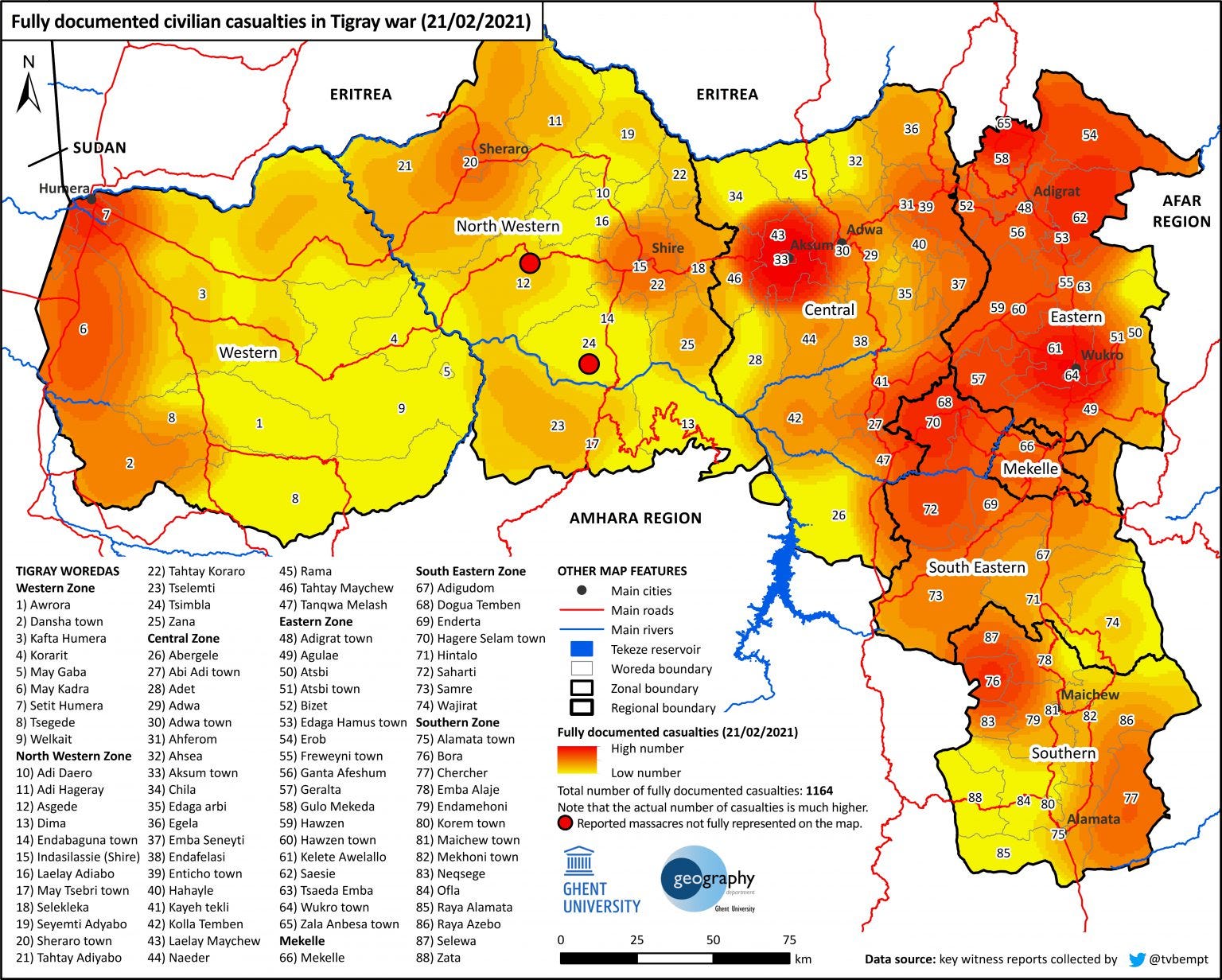
The situation quickly spiraled out of control as full blown pogroms and massacres occurred throughout the region. The map above highlights many occurrences with the results often only being known via satellite imagery of mass graves. Abiy Ahmed could not genocide his way out of the problem though. Eventually, the war stalled out and he had to sue for peace. Despite hundreds of thousands of dead Tigrayans, the TPLF still exists. The Tigray question had not been solved and they remained firmly within Ethiopia’s borders.
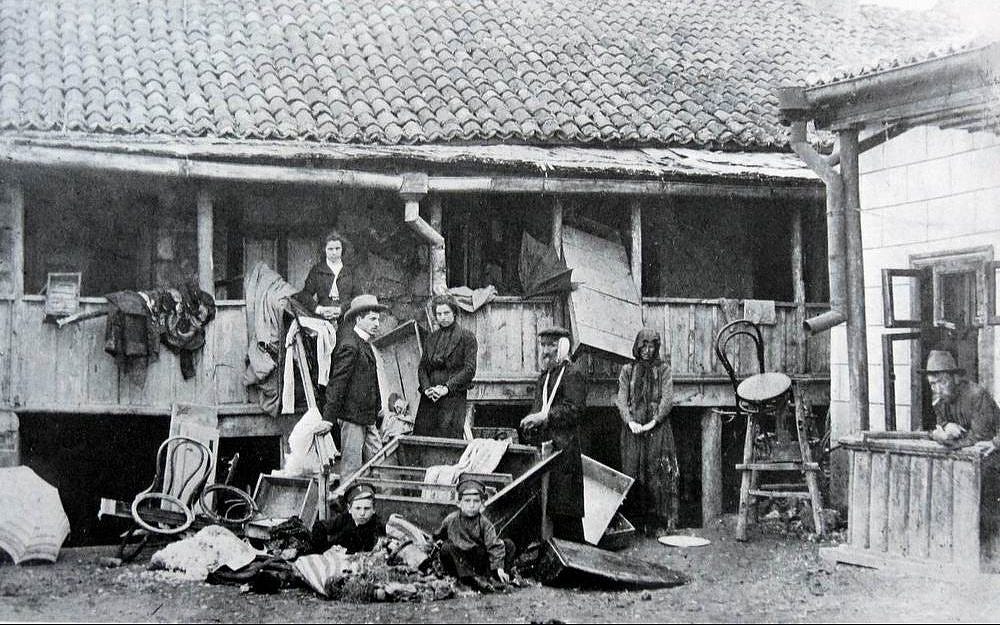
The prime example of this phenomenon is the one where this term actually came from. Historically, there had been tension in the Russian Empire with the Jewish population after the final partition of Poland. After the murder of Tsar Alexander II in 1881 by a Jewish assassin, all bets were off. Pogroms began in earnest.
In Kiev, dozens of Jews were killed. In 1903, another set of pogroms occurred. After the collapse of the Russian Government in World War I, a whole host of them occurred.
The Pogroms in Ukraine, 1918-19: Prelude to the Holocaust by Nokhem Shtif:
“There was a little variation in the course of the pogroms, both as to their duration and as to the excuses that were fabricated. For example, no excuse was made for the slaughter in Rossovo (Kiev province), on August 28, 1919, as soon as the Volunteer Army took the town. But as a rule the pogroms of the Volunteer Army followed the same pattern”
These pogroms were centered around Jewish ties to Bolshevism but realistically carried the same feuds of the last 50 years. Frustrations about an unassimilated populace working against the system had led to intermittent violence but never solved the issue. Even after this set of pogroms, there was still a large population. Some emigrated, but most stayed. Ultimately, these pogroms never achieved there goals and likely just hardened the Jews within Ukraine. The ruthlessness of the Holodomor was quite likely a byproduct of this decades long tit for tat.
Drawbacks
As shown from these examples, the pogrom option only works under certain conditions. Those conditions require specific geopolitical realities; that is, there must be very clear borders where another population is to go.
In the United States, this becomes an unusable option in isolation. Sure, I suppose if you went after Mexicans alone there would be a clear answer of where they were to go but let’s be realistic. Mexico isn’t taking other Latins like Salvadorians and Venezuelans and they sure as fuck aren’t taking Nigerians, Sikhs, and Hmongs. A quick political calculus also makes it clear that Mexicans are perhaps the least troublesome immigrant group and probably capable of assimilation (at least in comparison to other post-1990 Immigration Act groups).
The pogrom can be a useful tool if applied in conjunction with others OR if it is utilized in a specific geopolitical moment to move a single population. Otherwise, it is an extremely hard thing to control and risks spiraling out of hand or into civil war. Additionally, if you end up being on the losing end of power (such as the Ukrainians in the Soviet Union), you risk being the victims of the same violence.
Option 5: All of State Approach
This last option is not a truly independent one. It is simply what happens when an entire society gets behind the objective and is willing to utilize every means to remigrate a population. This has been done successfully in history and as recently as the past few years.
After World War II, nations who had native German populations quickly sought to expel them. Many had left in German evacuations towards the close of the war but whole groups, like the Sudeten Germans, remained. Although we now know a world of the post-war consensus, these nations did not. They feared new irredentist claims in the future and moved quickly against the Germans, Magyars, and even Poles.
The Expulsion of the German Population from Czechoslovakia by Theodor Schieder:
“The right of self-determination of the Czechoslovak nation, the basic prerequisite for its life in freedom, would exclude an unlimited right of self-determination for the Sudeten Germans.”
Plans were made by the government in exile for years. Once the Soviets entered the country, the Czechs immediately went to work. Germans were formally expelled. Roads were opened up for them to leave. Violence was done to villages that remained. The Red Army ravished anyone they could get their hands on. The Germans had been legally deprived of their rights within the country and faced certain death if they stayed (or a future in a Siberian camp). There was a clear place to go even if they had lived in Bohemia for centuries. Millions left in a matter of months.
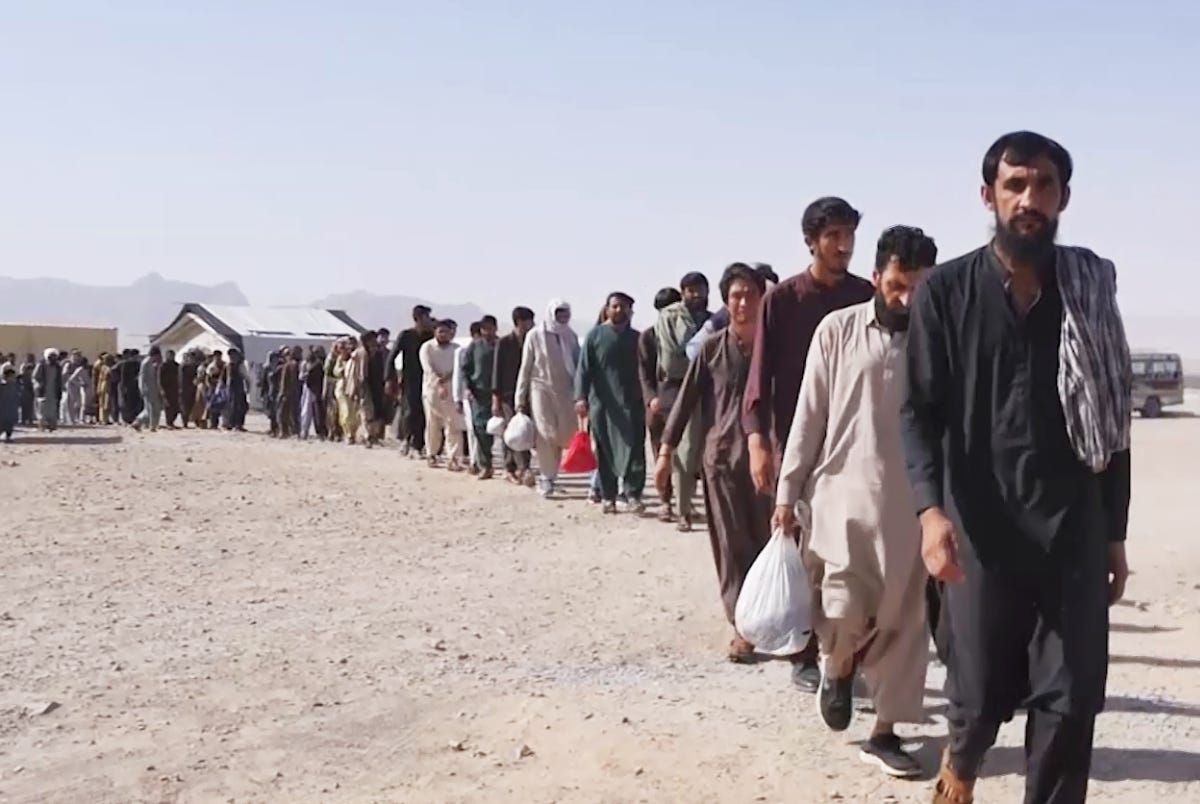
In 2025, Iran carried out a similar whole of state approach. Millions of Afghans had made their way into its borders throughout the GWOT era. Many were Sunni and increasing tensions with the United States presented the real concern that this population could be activated as a 5th column under the flag of someone like ISIS.
Coincidentally, or perhaps not, a few weeks before the 12 Day War, Iran gave Afghans a one month deadline to leave the country. Unlike the Germans, they were given a chance (and a carrot if you will) to leave on their own terms. After the deadline, the Iranian state went into action. They conducted raids, set up checkpoints, and utilized buses to carry out deportations. When necessary, violence was utilized. When possible deportations were done. Most of all, the road to self deportation was opened, subsidized, and heavily encouraged.
Iran managed to deport 1 million people in the first month. In the subsequent year they’ve tacked on nearly a million more. Only 2 million remain and if not for the current war they likely would be on pace to finish up soon. Headlines in 2025 out of the country detailed tens of thousands of deportations a day. They didn’t fuck around and they made it easy for the Afghans to get gone.
The Way Forward
Our own situation is not perfectly analogous to any of the above but there are lessons to draw from all of them. We can see that a bag of cash only shaves off a thin margin. We can see that careful deportations can be effective in the short term but do not fix structural problems. We also have learned that legislation fails for similar reasons. We have even seen that violent outbursts cannot work in isolation either.
Going forward, we need an all of state approach to solve the third world invasion. This will require legal and extralegal implications. In Europe, this may be simpler with a smaller population and less ambiguity as to who is a native European. In America, it will be complicated and will require compromises.
Recent moves on Temporary Protected Status (TPS) offer a useful test run. The recently denaturalized currently can leave with a bag of cash. They will be deported if they don’t comply. And the Judicial branch has affirmed the Executive’s actions. But these people don’t face any other consequences. What’s the worst that happens if they don’t leave? The only downside is a deportation which is what they area already facing.
Unfortunately, the end of TPS only affects a small number of groups and hopefully the status for Somalians will be ended next. TPS does not solve the invasion but it allows us to start testing out how we will actually go about remigration.
Ultimately, the solution to an invasion is an equal and opposite reaction. Our current paradigm does not allow for real solutions. To actually fix the problem, you must move past the ‘moderate solutions.’ In the short to medium term, it is very unlikely that the US, Europe, Australia, or Japan will actually take an all of state approach to the problem. As economic conditions deteriorate and politics becomes more unstable, this may appear on the table as an option for a politician to garner massive support.
I cannot predict what will happen but I can lay out the options that history provides. There is not going to be an easy answer. Either states are going to take painful action to save themselves or they are going to face collapse into ethnic conflict once they can no longer pay out the grain dole. Time will tell how this takes shape but I can guarantee when everything comes to a head it will look more like the examples cited than anything new.

Feel like the political will for more drastic action needs another decade/generation to build up steam. Yes that means things will get worse, that is the price, and the current direction of travel. We've got a hell of a good start going, but the older gens aren't gone yet, and for many things simply haven't gotten bad enough to make the move completely past the Pax Americana paradigm.
This whole migration hysteria is nuts. Latin people are largely fairly Western. A bit traditional but that’s what conservatives want, yeah? America is stronger with more people. You guys are the real barbarians. No concern for administration or statecraft, just the aesthetics of power and violence and dominance.